Sundar Small Industrial Estate Phase 2
Details
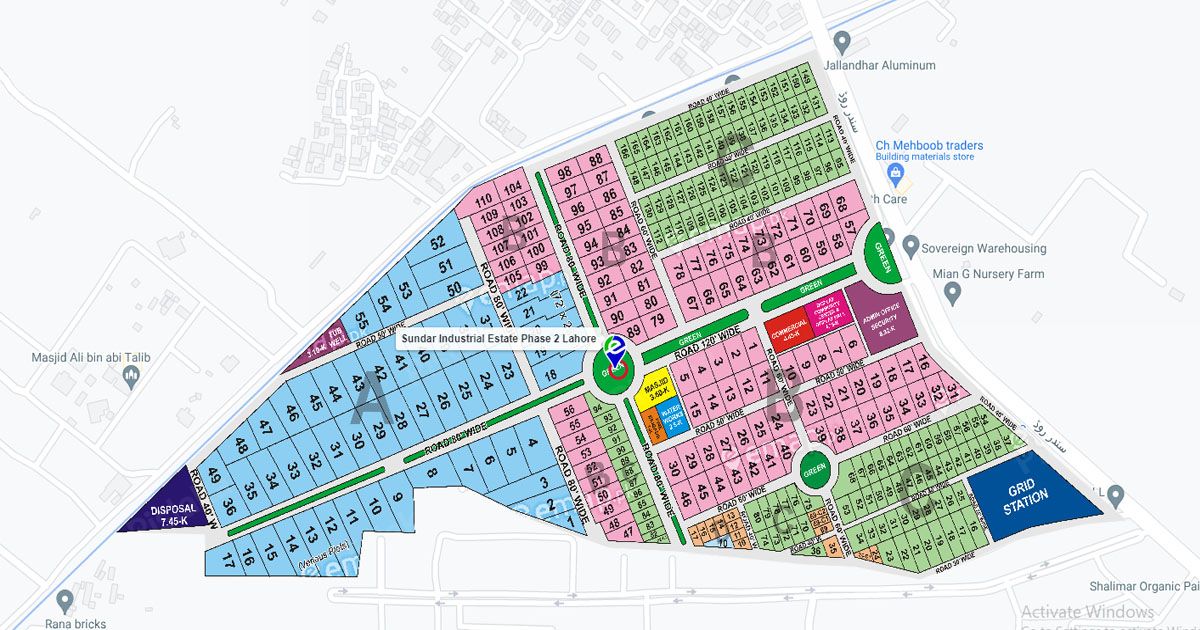
Sundar Small Industrial Estate Phase 2 is a government-established industrial community in Lahore, developed as part of initiatives to promote small-scale industries. It currently offers modern infrastructure and facilities, making it a thriving hub for manufacturing and trade. The estate is strategically located with comprehensive amenities and a secure environment, positioning it as a key industrial zone in the region.
- Developer: Lahore Development Authority (LDA) - Government-led development
- Ideal For: This estate is best suited for industrial investors and entrepreneurs looking for affordable, well-equipped plots in a developed industrial community.
Map-calculated
In total
In total
Latest Updates
Punjab Food Authority Seals Food Units in Sundar Industrial Estate Over Substandard Oil Use
In June 2026, the Punjab Food Authority (PFA) sealed two food production units located in Sundar Industrial Estate for serious violations of food safety standards, including the repeated use of substandard cooking oil, absence of mandatory medical and training certificates, poor sanitation, and unhygienic packaging conditions. A total of 400 litres of substandard oil was discarded, and fines worth PKR 400,000 were imposed.
HONOR Smartphone Manufacturing Facility to Begin Production at Sunder Industrial Estate in April 2026
Global AI device ecosystem company HONOR has established a local smartphone manufacturing facility in partnership with Golden Connect at Sunder Industrial Estate, Lahore, scheduled to commence production in April 2026. The state-of-the-art unit aims to enhance supply-chain efficiency, enable competitive pricing, support job creation, and strengthen Pakistan’s electronics manufacturing ecosystem.
Pakistan Sundar Industrial Expo 2026 Scheduled for February 2026 at Sundar Industrial Estate Grounds
Pakistan Sundar Industrial Expo 2026 (PSIE2026), promoted as the country’s premier industrial showcase, is set to be held from 11–13 February 2026 at the Sundar Industrial Estate Grounds in Lahore. The event is drawing national and international exhibitors and is officially endorsed by PIEDMC and multiple chambers of commerce across Pakistan.
720 Families Allocated Residential Flats in Sundar Industrial Estate Under CM Maryam Nawaz’s Labour Welfare Initiative
In December 2025, Punjab Chief Minister Maryam Nawaz oversaw the digital lottery-based allocation of two-room residential flats to 720 families of industrial workers — primarily from Kasur and Lahore — within Sundar Industrial Estate. The initiative includes reserved quotas for widows and persons with disabilities, reflecting a broader provincial housing strategy targeting labour welfare.
Ongoing Plot Allotment and Commercial Development in Sundar Industrial Estate Phase 2 by PIEDMC
The Punjab Industrial Estates Development & Management Company (PIEDMC) continues to allocate industrial and commercial plots in Sundar Industrial Estate Phase 2 via computerized balloting. Although official tender details (sizes, prices) remain unspecified, updates confirm active land-release cycles aimed at attracting investors and expanding infrastructure capacity.

Features a well-developed road network made of steel-reinforced concrete, with underground utilities. Over 90% of the development is complete.

Located strategically on Sundar-Raiwind Road, offering proximity to major industrial employers like BT, NFC-2, Sui-Gas-2, and AWT-2, which is a significant advantage for daily commuting.
Offers affordable plot prices, making it an economical investment option.

The area suffers from noise, traffic, and overall livability issues typical of an industrial zone.
Concerns about chemical pollution, harmful gases, and smoke from factories negatively impacting residents, especially young kids and pregnant women.
Existing facilities like the on-site bank, hospital, and fire-protection services are rated poorly by residents and investors.
The estate lacks essential residential and community facilities such as dedicated worker housing, a canteen, a bus terminal, technical libraries, and workshops.
Key services like waste collection, a weigh-bridge, an exhibition hall, and a central repair workshop are missing.